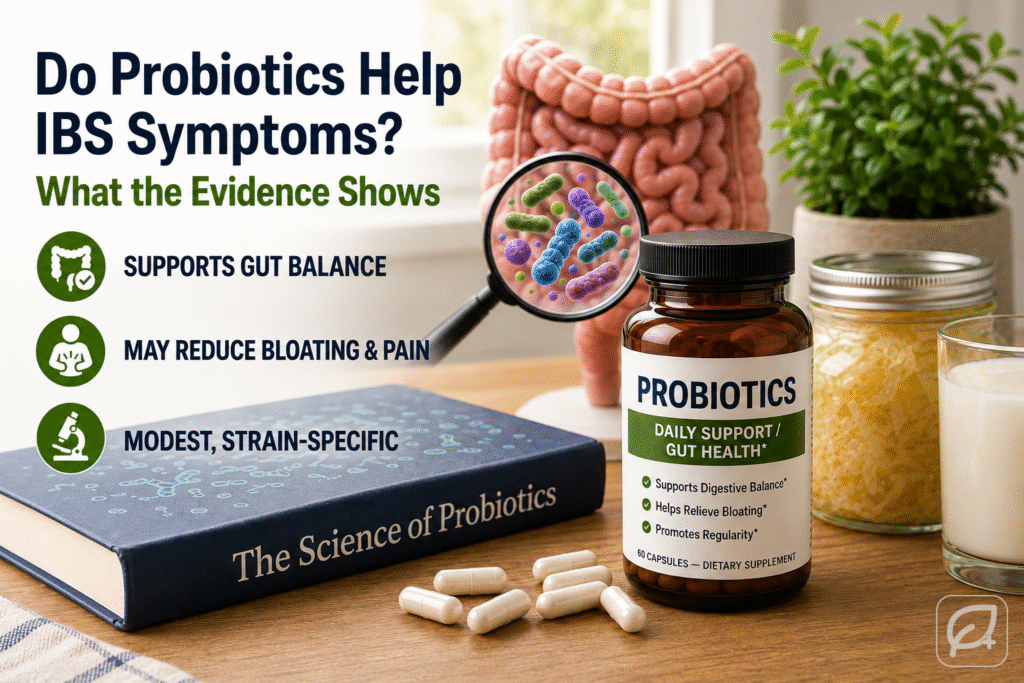
Probiotics are one of the most commonly tried supplements for irritable bowel syndrome (IBS), and the honest answer is: it depends heavily on which strain you’re taking. This isn’t a “yes, probiotics help IBS” or “no, they don’t” situation — the evidence is strain-specific, and being clear about that is more useful than a blanket answer either way.
What the research actually shows
A large meta-analysis covering 82 trials and over 10,000 patients found that certain probiotics can reduce overall symptom burden and abdominal pain for some people with IBS. That said, the certainty of the evidence was rated low to very low for most strains under GRADE criteria — the standard framework researchers use to grade how confident we should be in a result. In plain terms: promising, but not conclusive, and results vary a lot depending on the specific strain, dose, and trial.
Which strains have the strongest evidence
- Escherichia strains — showed moderate certainty of benefit for global IBS symptoms, the strongest evidence rating among the options studied.
- Lactobacillus plantarum 299V — one of the longest clinical track records of any strain studied for IBS, though certainty of benefit for global symptoms was rated low.
- Bacillus coagulans — has emerged in the clinical literature as one of the more consistently effective species for IBS symptom relief, including stool frequency and consistency.
- Saccharomyces boulardii CNCM I-745 — shown promise specifically for managing diarrheal episodes rather than IBS symptoms broadly.
What this means for choosing a product
The practical takeaway: a probiotic’s CFU count or its price tag says very little about whether it will help your specific IBS symptoms. What matters is whether the specific strain in the product has actually been studied for the type of symptom you’re trying to address (bloating, pain, irregularity, diarrhea) — look for the strain name and, ideally, a specific research citation on the label or the brand’s website, not just a genus name like “Lactobacillus” with no further detail.
It’s also worth setting expectations: even the better-evidenced strains show a moderate effect at best, not a cure. If symptoms are significant or persistent, that’s a conversation for a doctor, not a supplement aisle decision.
This article is researched and fact-checked against peer-reviewed studies and government health databases (NIH, PubMed). It is not written or reviewed by a licensed medical professional, and it is not a substitute for personalized medical advice — talk to your doctor about IBS symptoms, especially if they are severe, persistent, or accompanied by other concerning symptoms. See how we review.
Sources: NIH PMC: Efficacy of Probiotics for Irritable Bowel Syndrome, eClinicalMedicine: Strain-specific efficacy of probiotics for IBS