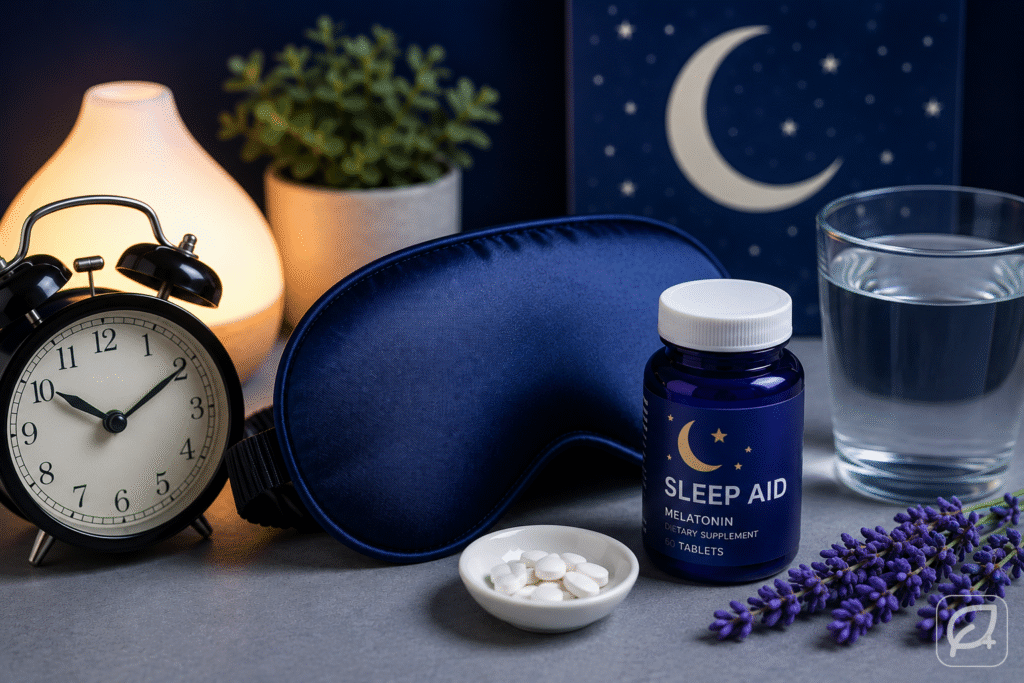
Melatonin is the sleep supplement most people reach for first, but it’s not the only option — and it isn’t automatically the right one for everyone. Here’s how it stacks up against other natural sleep aids.
Melatonin: the most evidenced option
Melatonin has the largest body of clinical research behind it among natural sleep aids, and it’s shown to improve both falling asleep and overall sleep quality, including in older adults. Research supports its safety for long-term use (2+ years) with minimal side effects and no dependency risk — unlike prescription sleep medications.
Effective doses tend to be lower than people expect: studies show 0.5–5 mg works well, with higher doses not providing additional benefit. Melatonin isn’t risk-free for everyone, though — it can reduce the effectiveness of certain medications, and it may not be advisable for people who have had an organ transplant or who have depression, or a bleeding or seizure disorder.
Other natural options: more mixed evidence
Valerian root and hops have shown some evidence of improving sleep quality and reducing insomnia symptoms in studies, though results are less consistent than melatonin‘s. Passionflower has shown mixed results across studies. In general, herbal sleep supplements are not regulated by the FDA the same way medications are, so their effects and quality can be less predictable than melatonin’s, which has been studied far more extensively.
Which should you choose?
For most people looking for occasional or short-term sleep support, melatonin is the better-evidenced starting point, particularly given its long safety track record. If melatonin doesn’t work well for you or you prefer to avoid it, valerian or hops have some supporting evidence, though expect more variability in results. Whichever you choose, check with a doctor first if you take other medications or have an existing health condition — sleep supplements are not automatically safe to combine with everything else you might be taking.
This article is researched and fact-checked against peer-reviewed studies and government health databases (NIH, PubMed). It is not written or reviewed by a licensed medical professional, and it is not a substitute for personalized medical advice — talk to your doctor before starting a sleep supplement, especially if you take medication or have a health condition. See how we review.
Sources: Sleep Foundation: Natural Sleep Aids, NIH PMC: Herbal and Natural Supplements for Improving Sleep