Psyllium husk is the unglamorous workhorse of gut health — a soluble fiber from the seeds of Plantago ovata that forms a gel in water. Unlike most of the supplement aisle, psyllium’s two main claims are backed by decades of consistent evidence, including an FDA-recognized health claim. If your gut-health budget only covers one thing besides food, this is a strong candidate.
What the evidence supports
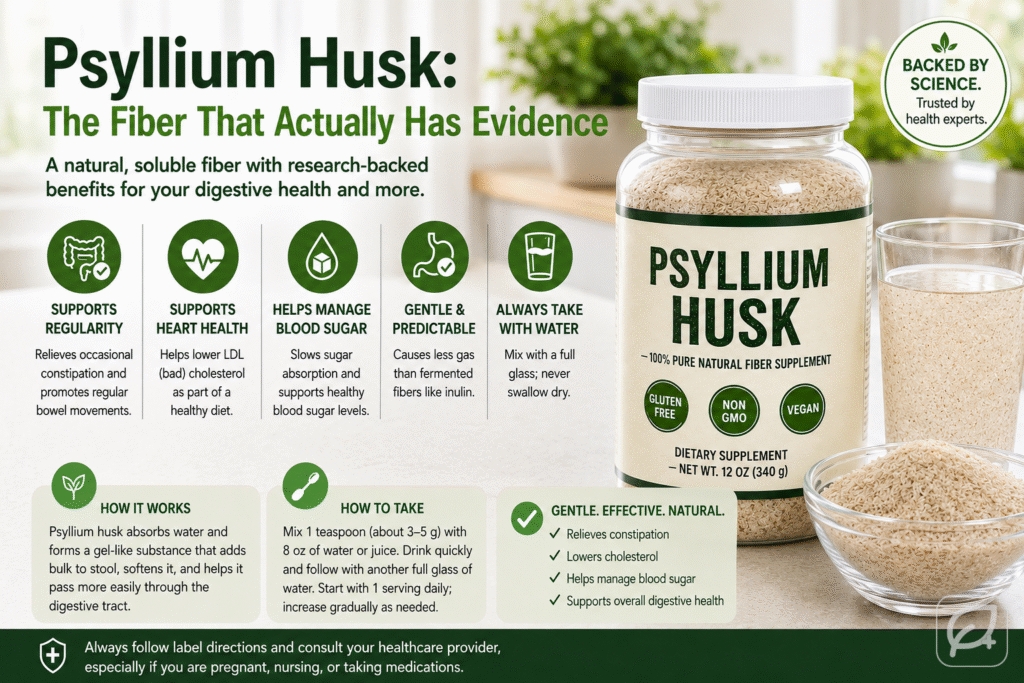
- Regularity — psyllium is a bulk-forming laxative that helps both constipation (softening and bulking stool) and, usefully, mild diarrhea (absorbing excess water). It’s the active ingredient in Metamucil and many store brands.
- LDL cholesterol — this is where psyllium stands out: soluble fiber from psyllium carries an FDA-recognized heart-health claim, with the effect threshold around 7 g of soluble fiber per day (roughly 10–12 g of psyllium husk). A large meta-analysis found ~10 g/day lowers LDL in a dose-dependent way — a modest but real effect, on top of (not instead of) diet and any prescribed treatment.
- Blood sugar — taken with meals, the gel slows carbohydrate absorption and can blunt post-meal glucose spikes; people on diabetes medication should involve their doctor since doses may need adjusting.
How psyllium differs from probiotics and prebiotics
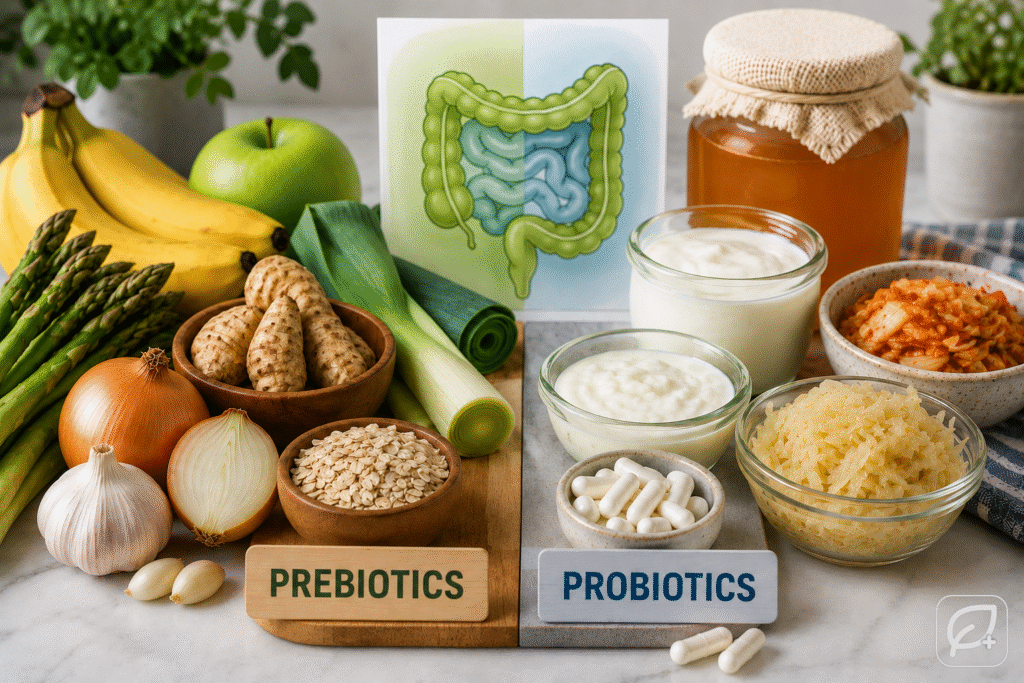
Psyllium isn’t bacteria (probiotics) and it’s only partially fermented by gut microbes, so it’s technically a modest prebiotic at best — its main action is mechanical: gel-forming bulk. That’s actually why it’s so predictable. It also tends to cause less gas than strongly fermented fibers like inulin, a common reason people abandon fiber supplements.
Dosage and how to take it
Typical study doses run 5–15 g of psyllium husk per day, split into 2–3 doses taken with meals — and each dose needs a full glass of water (at least 240 ml / 8 oz). Start low (a teaspoon or ~5 g daily) and build up over a week or two; ramping up too fast is the main cause of bloating.
Safety and cautions
- Water is non-negotiable. Taken dry or with too little liquid, psyllium can swell and cause choking or an esophageal blockage — this is the standard label warning, and it’s serious. Anyone with swallowing difficulties or known GI narrowing/strictures should avoid it unless a doctor says otherwise.
- Medication spacing — the gel can reduce absorption of some medications; take medicines at least 2 hours before or after psyllium.
- Expect an adjustment period — mild bloating early on usually settles as your gut adapts.
Bottom line
Cheap, boring, and better evidenced than most of the gut-health aisle: psyllium is worth considering for regularity, and at ~10 g/day it’s one of the few supplements with a legitimate LDL-lowering claim. Start low, always with plenty of water, and space it away from medications.
This article is researched and fact-checked against peer-reviewed studies and government health databases (NIH, FDA, PubMed). It is not written or reviewed by a licensed medical professional, and it is not a substitute for personalized medical advice — talk to your doctor before starting psyllium if you take medication, have diabetes, or have any swallowing or GI condition. See how we review.
Sources: American Journal of Clinical Nutrition: Psyllium fiber and LDL cholesterol — meta-analysis, Health Canada: Psyllium and blood cholesterol lowering assessment