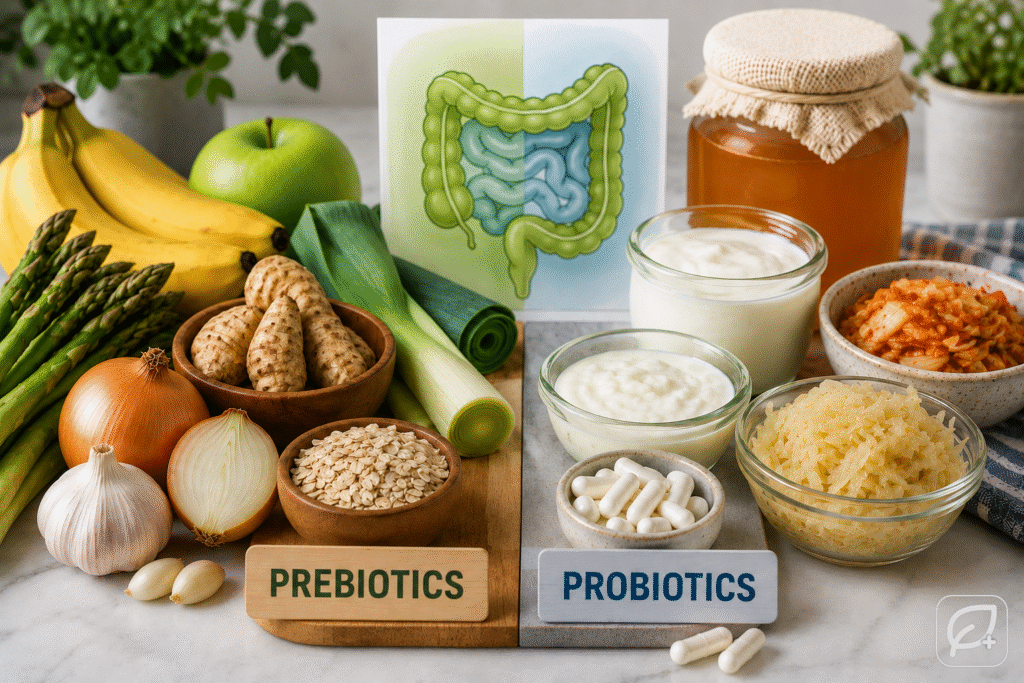
Prebiotics and probiotics get lumped together constantly, but they’re not the same thing — and understanding the difference actually matters for choosing the right product. In short: probiotics are the beneficial organisms themselves, and prebiotics are the food that feeds them.
Probiotics: the live organisms
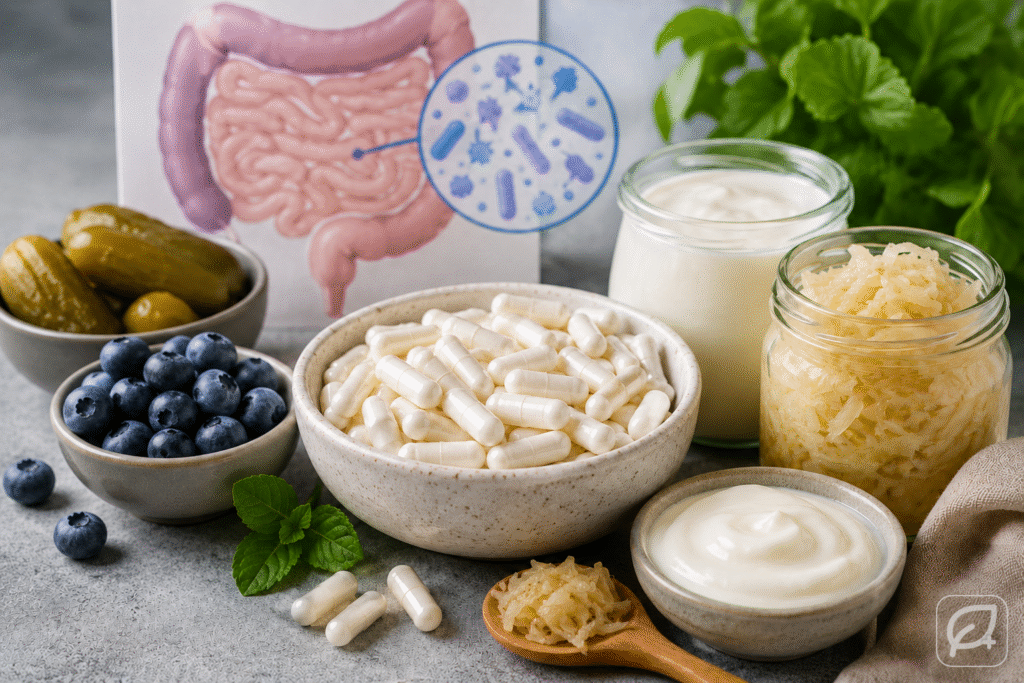
Probiotics are live microorganisms — mainly bacteria from genera like Lactobacillus and Bifidobacterium, plus some yeasts — that are taken to support the balance of bacteria already living in your gut. They’re found in fermented foods like yogurt, kefir, kimchi, sauerkraut, miso, and kombucha, as well as in capsule or powder supplements. One caveat worth knowing: the processing some fermented foods go through (pasteurization, in particular) can kill off the live cultures, so not every product labeled “fermented” still contains live probiotics by the time it reaches you.
Prebiotics: the food that feeds them
Prebiotics are a type of fiber — specifically, non-digestible carbohydrates like inulin, galactooligosaccharides (GOS), and fructooligosaccharides (FOS) — that humans can’t digest but the beneficial bacteria in the gut can. Rather than adding new bacteria, prebiotics feed and support the bacteria that are already there. They occur naturally in a range of fruits, vegetables, legumes, and whole grains.
Do you need both?
Growing evidence suggests prebiotics and probiotics both play a role in gut health, and research increasingly looks at combining the two (sometimes called synbiotics) rather than treating them separately. Evidence points to potential benefits for immune function, gut health, and even mental health and blood sugar control, though as with most supplement research, effect sizes and strength of evidence vary a lot by study and by the specific strains or fiber types used.
A safety note
Prebiotic fiber can cause gas, bloating, or digestive discomfort, especially if you increase intake quickly — starting with a smaller amount and increasing gradually tends to help. For probiotic-specific safety considerations, including who should be cautious about taking live bacterial supplements, see our probiotics guide.
This article is researched and fact-checked against peer-reviewed studies and government health databases (NIH, PubMed). It is not written or reviewed by a licensed medical professional, and it is not a substitute for personalized medical advice — talk to your doctor before making significant changes to your diet or starting a new supplement, especially if you have a digestive condition. See how we review.
Sources: Cleveland Clinic: Difference Between Prebiotics and Probiotics, MD Anderson: Prebiotics versus probiotics