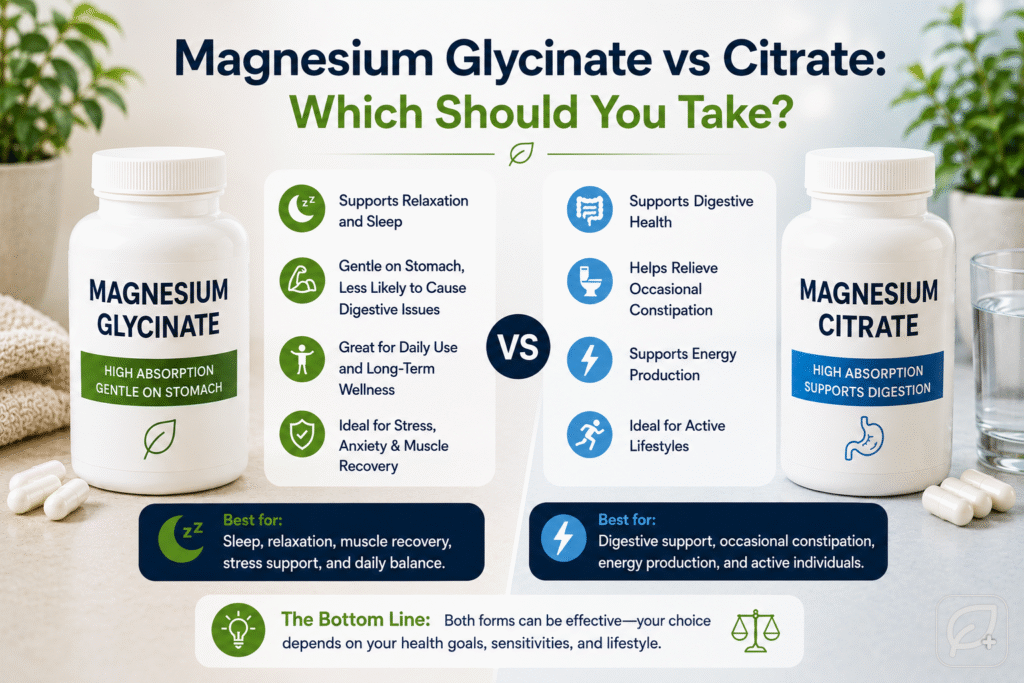
Magnesium glycinate and magnesium citrate are two of the most popular magnesium supplements — and they’re often confused. Both are well absorbed, but they behave differently in the body, and the right one depends entirely on why you’re taking magnesium. Here’s the short version before the details:
- Choose glycinate for sleep, relaxation, anxiety, or gentle daily supplementation.
- Choose citrate if you also want help with occasional constipation or digestive regularity.
For background on magnesium itself — how much you need and its safety limits — see our magnesium guide.
Absorption: both good, glycinate gentler
Both forms are “organic” magnesium salts and are absorbed well — far better than cheap magnesium oxide, which is often under 10% absorbed. Human studies put magnesium glycinate’s bioavailability around 23% versus roughly 11% for oxide. The practical difference between glycinate and citrate isn’t really about how much you absorb — it’s about how they affect your gut and nervous system.
Best for sleep and anxiety: glycinate
Magnesium glycinate is bound to glycine, an amino acid that acts as a calming (inhibitory) neurotransmitter. That gives glycinate a mild relaxing quality on top of the magnesium itself, and glycine supplementation has been shown to improve subjective sleep quality. Just as importantly, glycinate is gentle on the stomach — it doesn’t pull water into the bowel the way citrate does, so it won’t send you to the bathroom in the middle of the night. That combination is why glycinate is the usual pick for sleep, calm, and long-term daily use.
Best for constipation and regularity: citrate
Magnesium citrate draws water into the intestines, which produces a mild laxative effect. If you’re dealing with occasional constipation, that’s a feature, not a bug — citrate does double duty as a magnesium source and a gentle stool softener. But for sleep, that same effect is a drawback: taking citrate at night can cause loose stools that interrupt rest.
Side effects and daily use
Because of its laxative action, citrate is more likely to cause loose stools, cramping, or diarrhea — especially at higher doses. Glycinate is generally better tolerated for consistent, long-term daily use. Both share magnesium’s overall safety profile: the Tolerable Upper Intake Level for supplemental magnesium is 350 mg/day for adults, and going well above that (in any form) can cause digestive upset.
Typical doses
- Glycinate for sleep: commonly 200–400 mg elemental magnesium, taken 30–60 minutes before bed — start low (around 200 mg) and adjust.
- Glycinate for daily calm or repletion: around 200–300 mg elemental, once daily or split.
- Citrate for occasional constipation: around 200–400 mg elemental, usually with a meal, adjusted to your response.
Remember these are elemental magnesium amounts, and the 350 mg/day supplemental upper limit still applies — check the label, since it may list the compound weight and the elemental amount separately.
So which should you choose?
It comes down to your goal. If you want magnesium for sleep, stress, or everyday supplementation and want to avoid digestive side effects, glycinate is the better fit. If you’d also welcome help with regularity, citrate gives you both. Many people who take magnesium purely for sleep specifically avoid citrate for that reason — and people who struggle with constipation often prefer citrate for the same reason glycinate users avoid it.
This article is researched and fact-checked against peer-reviewed studies and government health databases (NIH Office of Dietary Supplements, PubMed). It is not written or reviewed by a licensed medical professional, and it is not a substitute for personalized medical advice — talk to your doctor or pharmacist before starting a magnesium supplement, especially if you take medication or have kidney problems. See how we review.
Sources: NIH ODS Magnesium Fact Sheet for Health Professionals, Mayo Clinic: Types of magnesium supplements