Melatonin is the most widely used sleep supplement in the world — and one of the most misused. It’s a hormone your brain produces in the evening to signal that it’s time to sleep, not a sedative. Understanding that difference is the key to using it well: melatonin shifts your sleep timing; it doesn’t knock you out.
What melatonin actually does
Your pineal gland releases melatonin as light fades, telling your body clock that night has arrived. Taken as a supplement, it’s most effective for problems of timing: trouble falling asleep, jet lag, and shift work. The American Academy of Sleep Medicine supports strategically timed melatonin for exactly those uses — not as a treatment for chronic insomnia. If you’ve been sleeping badly for months, melatonin isn’t the fix, and that’s a conversation for a doctor.
Dosage: less is more
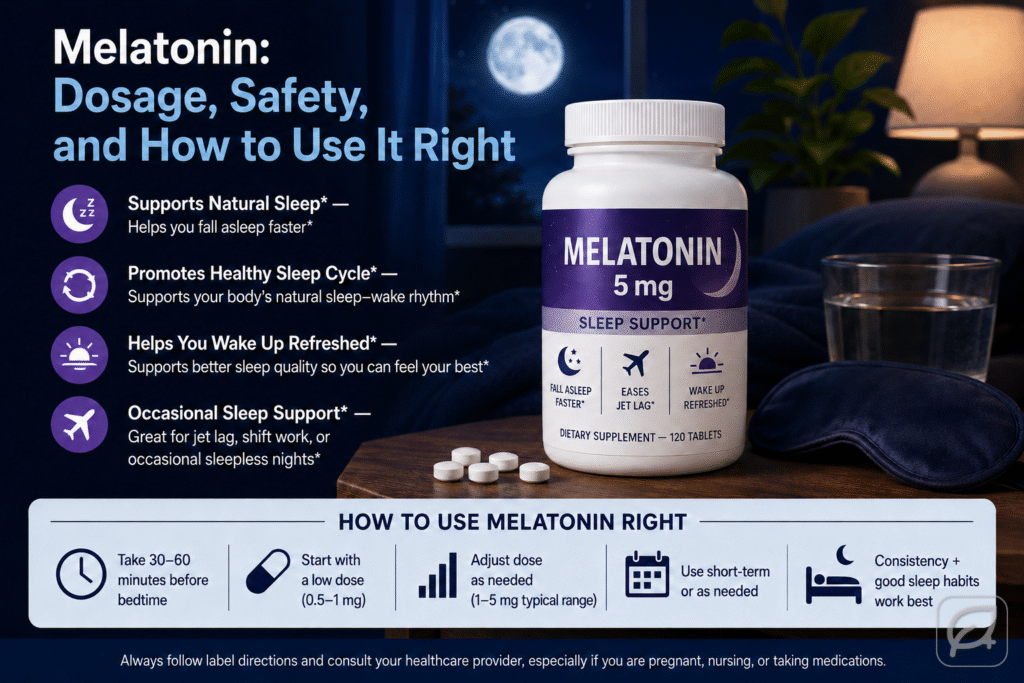
This is where most people go wrong. Effective doses are much smaller than the 5–10 mg gummies on store shelves suggest: most adults should start at 0.5–1 mg, taken 30–60 minutes before bed, and many do well at 1–3 mg. Doses above 5 mg generally don’t work better — they just increase the chance of grogginess, vivid dreams, and headaches the next day. More melatonin does not mean more sleep.
Side effects and safety
Melatonin is considered safe for short-term use in most adults, with side effects that are usually mild: daytime drowsiness, vivid dreams or nightmares, and headaches. The honest caveat: long-term safety is less certain — it simply hasn’t been studied as thoroughly over years of nightly use, which is worth knowing if you’re taking it indefinitely.
A practical note on quality: melatonin is a supplement, not an FDA-approved drug, and quality control is inconsistent. When researchers tested 25 melatonin gummy products, the measured melatonin content ranged from 74% to 347% of the amount on the label, 22 of the 25 were inaccurately labeled, and one contained no melatonin at all (JAMA, 2023). A third-party certified product (USP verified, for example) is worth the small premium — see how we evaluate supplements.
Who should avoid it
- Pregnant or breastfeeding women — insufficient safety data.
- People with dementia — generally advised against.
- Infants and young children — don’t give melatonin to children without a pediatrician’s guidance; accidental melatonin overdoses in children have risen sharply with the popularity of gummies.
- Older adults, people with liver impairment, and anyone on multiple medications should use extra caution and involve their doctor.
Medication interactions
- Sedating substances — alcohol, cannabis, benzodiazepines, antihistamines like diphenhydramine, and opioids can stack with melatonin’s drowsiness.
- Blood thinners — melatonin with warfarin may increase bleeding risk.
- It can also interact with immunosuppressants, diabetes medications, and blood pressure drugs — check with a pharmacist if you take any of these.
Bottom line
Use melatonin like a clock-setter, not a sleeping pill: a low dose (0.5–3 mg), 30–60 minutes before your target bedtime, for timing problems like jet lag or a shifted schedule. For everyday relaxation-oriented sleep support, compare it with magnesium in our melatonin vs magnesium comparison, and see the broader field in natural sleep aids vs melatonin.
This article is researched and fact-checked against peer-reviewed studies and government health databases (NIH, PubMed). It is not written or reviewed by a licensed medical professional, and it is not a substitute for personalized medical advice — talk to your doctor before starting melatonin, especially if you are pregnant, take medication, or have persistent sleep problems.
Sources: NIH NCCIH: Melatonin — What You Need To Know, Mayo Clinic: Melatonin side effects, UC Davis Health: Melatonin and your sleep