Vitamin D supplements come in two forms — D2 (ergocalciferol) and D3 (cholecalciferol) — and the label rarely explains the difference. Both raise vitamin D levels in the blood, but they don’t behave identically, and the difference matters more at higher doses than at typical everyday doses. Here’s the short version before we get into it: D3 is the form your own skin makes from sunlight, and it’s generally the more effective choice for most people.
Where each form comes from
This is the most practical difference between the two:
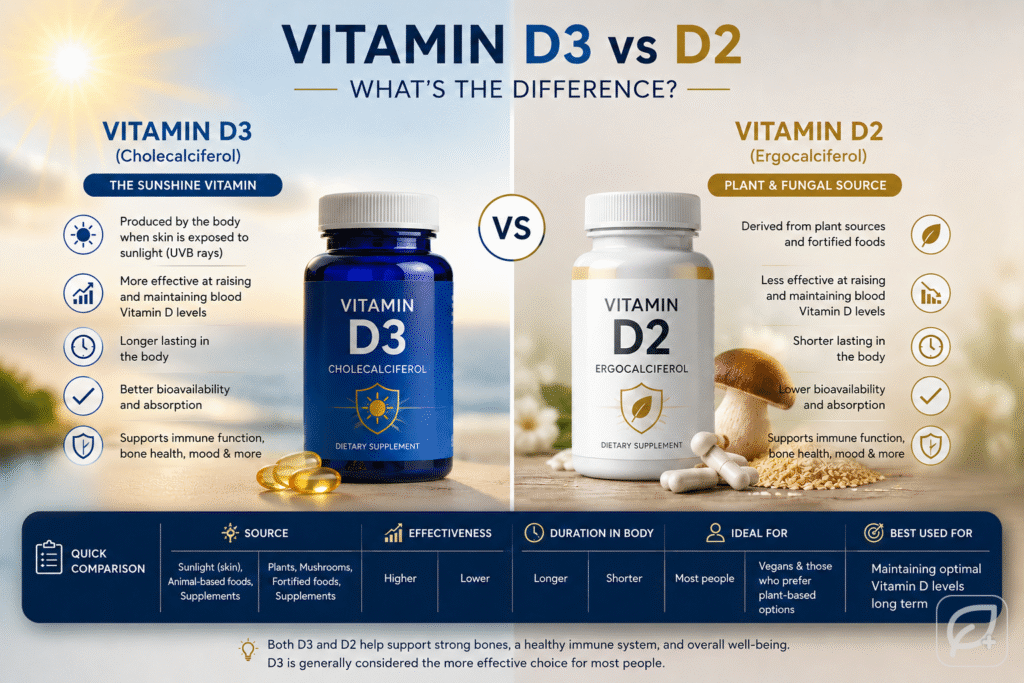
- Vitamin D3 (cholecalciferol) is the form your body produces when skin is exposed to sunlight (UVB rays), which is why it’s nicknamed “the sunshine vitamin.” In supplements it’s most commonly derived from lanolin (sheep’s wool grease) or, for vegan D3, from lichen. It’s also the form in animal-based foods like oily fish and egg yolks.
- Vitamin D2 (ergocalciferol) comes from plant and fungal sources — typically irradiated yeast or mushrooms — and is the form used to fortify many foods. Because it’s not animal-derived, it’s often the choice for vegans and anyone avoiding animal ingredients.
Chemically, the two forms differ only in their side-chain structure, but that small difference affects how the body processes them.
Does the form actually matter?
At typical nutritional doses, D2 and D3 appear roughly equivalent at raising blood vitamin D levels. At higher doses, the picture changes: D3 tends to raise and sustain blood vitamin D levels more effectively and for longer, while D2 is generally considered less potent. This is why D3 is the more commonly recommended and more widely available form — but D2 remains a legitimate option, particularly for those who prefer a plant-based supplement.
Quick comparison
- Source — D3: sunlight, animal-based foods, supplements. D2: plants, mushrooms, fortified foods, supplements.
- Effectiveness at raising blood levels — D3: higher. D2: lower.
- How long it lasts in the body — D3: longer. D2: shorter.
- Best suited for — D3: most people. D2: vegans and those who prefer plant-based options.
Both forms support the same things — bone health, immune function, and overall wellbeing — and both effectively raise vitamin D levels. For most people, D3 is simply the more efficient way to get there.
How much do you need?
The Recommended Dietary Allowance (RDA) for adults ranges from 600–800 IU (15–20 mcg) per day, depending on age. The Tolerable Upper Intake Level (UL) for adults is 4,000 IU (100 mcg) per day from supplements — taking more than this regularly increases the risk of toxicity.
How you take it matters, too. Vitamin D is fat-soluble, so taking your supplement with a meal that contains some fat helps your body absorb it. In a randomized crossover trial, taking vitamin D3 with food rather than on an empty stomach produced a meaningfully higher rise in blood levels of 25-hydroxyvitamin D — the marker used to gauge vitamin D status (randomized crossover study, PMC4882721). You don’t need a high-fat meal; a normal breakfast or dinner with a little olive oil, nuts, eggs, or dairy is enough. Pairing your dose with the largest meal of the day is an easy way to get more out of whichever form you choose.
Vitamin D toxicity
Vitamin D toxicity is almost always caused by excessive supplement intake, not sun exposure or food, and most reports place the toxicity threshold between 10,000 and 40,000 IU/day taken consistently over time. Toxicity works by raising blood calcium levels too high (hypercalcemia), with early symptoms including loss of appetite, nausea, vomiting, and constipation, and more serious cases potentially involving kidney problems and irregular heartbeat.
This article is researched and fact-checked against peer-reviewed studies and government health databases (NIH Office of Dietary Supplements, PubMed). It is not written or reviewed by a licensed medical professional, and it is not a substitute for personalized medical advice — talk to your doctor before starting a vitamin D supplement, especially at doses above the RDA. See how we review.
Sources: NIH ODS Vitamin D Fact Sheet for Health Professionals, NIH PMC: Differential effects of vitamin D2 and D3 supplements