L-theanine is a naturally occurring amino acid found in tea leaves (Camellia sinensis) — it’s part of why tea produces a calmer, more focused feeling than coffee alone, even though both contain caffeine. It’s absorbed well and can cross the blood-brain barrier, which is why it’s been isolated and sold as a standalone supplement for relaxation, sleep, and focus.
What the evidence shows
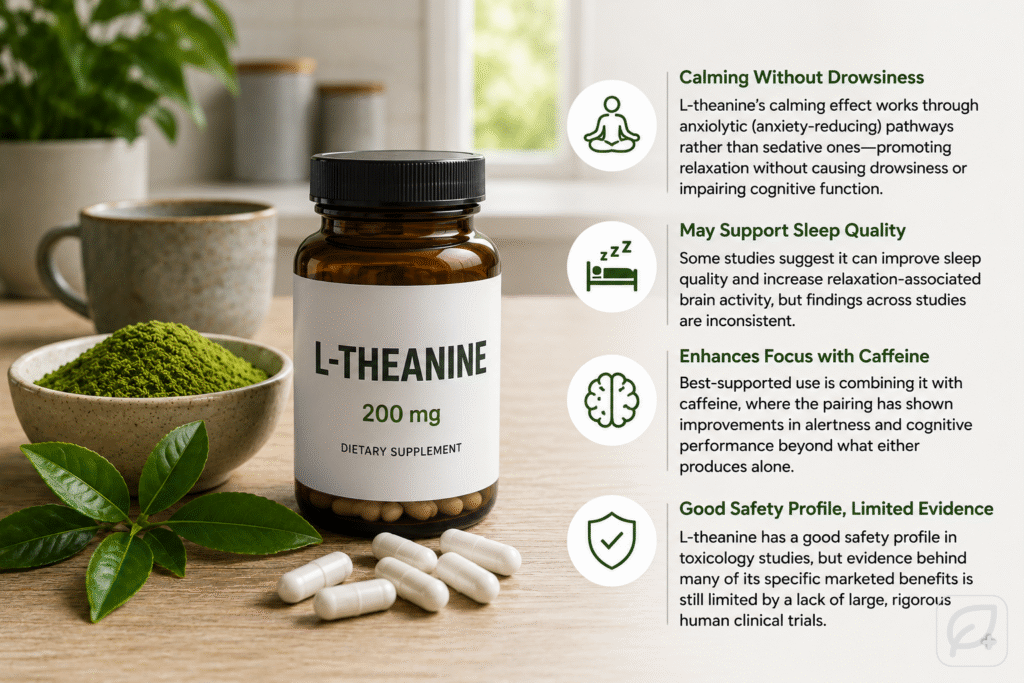
L-theanine’s calming effect appears to work through anxiolytic (anxiety-reducing) pathways rather than sedative ones — studies have found it aids relaxation without causing drowsiness or impairing cognitive function, which is different from how a typical sleep aid works. For sleep specifically, some studies suggest it can improve sleep quality and increase relaxation-associated brain activity, but findings across studies are inconsistent. For focus, the best-supported use is combining it with caffeine, where the pairing has shown improvements in alertness and cognitive performance beyond what either produces alone.
It’s worth being direct about the limits of the evidence here: while L-theanine has a good safety profile in toxicology studies, the evidence behind many of its specific marketed benefits is still limited by a lack of large, rigorous human clinical trials.
Dosage
A typical daily dose for healthy adults is 200–500 mg. Clinical studies have used doses ranging from 50 mg up to 1,000 mg/day, with 900 mg/day well tolerated over an eight-week trial period.
Safety
L-theanine is generally well tolerated, including in studies where it was used alongside common psychiatric medications, with few adverse effects reported even at the higher end of studied doses. As with any supplement taken alongside prescription medication — particularly medications affecting mood, blood pressure, or the central nervous system — it’s worth checking with a doctor or pharmacist first, since interaction research is still limited.
This article is researched and fact-checked against peer-reviewed studies and government health databases (PubMed, NIH). It is not written or reviewed by a licensed medical professional, and it is not a substitute for personalized medical advice — talk to your doctor or pharmacist before starting any new supplement, especially if you take medication. See how we review.
Sources: NIH PMC: Safety and Efficacy of L-Theanine Supplementation, NIH PMC: L-theanine, from tea leaf to trending supplement