Fish oil is one of the biggest supplement categories in the world, and also one of the most oversold. The two omega-3 fatty acids that matter in fish oil are EPA and DHA — and whether a supplement is worth buying comes down almost entirely to how much of those two it actually delivers, and why you’re taking it.
What the evidence supports (and what it doesn’t)
The strongest, most consistent evidence for omega-3 supplements is lowering triglycerides — high doses reliably reduce them, which is why prescription-strength omega-3s exist. Evidence also supports a role in general heart and brain health as part of overall diet, and omega-3s are important in pregnancy for fetal development (under medical guidance).
Where the record is more honest than the marketing: large trials of fish oil for preventing heart attacks and strokes in the general population have produced mixed results — some positive, several showing no benefit. And higher-dose omega-3s have been associated in some trials with a small increased risk of atrial fibrillation (an irregular heart rhythm). The brain is a similar story: a rigorous 2026 trial gave older adults who rarely ate fish two years of high-dose DHA, and while it raised omega-3 levels in the brain, it produced no improvement in memory or cognition and didn’t slow the brain changes linked to Alzheimer’s — a reminder that omega-3s matter as part of a whole diet, but a supplement is not a proven brain booster. Fish oil is a useful tool for specific jobs, not a cure-all.
On the question people care about most — does a daily fish oil pill prevent heart attacks and strokes in otherwise healthy people? — the two largest trials are underwhelming. In VITAL (nearly 26,000 adults) and ASCEND (people with diabetes), a standard 1 g/day dose did not significantly reduce major cardiovascular events. VITAL hinted at fewer heart attacks specifically, but not strokes or overall risk. Unless you have high triglycerides or a specific medical reason, a fish oil habit probably isn’t moving your heart-disease risk much.
How much EPA + DHA do you need?
- General health: most health organizations suggest around 250–500 mg combined EPA+DHA daily — achievable from two servings of oily fish per week, no supplement required.
- If you supplement: check the label for actual EPA and DHA amounts, not just “1000 mg fish oil” — a 1,000 mg softgel may contain only ~300 mg of EPA+DHA combined.
- Safety ceiling: the FDA considers supplements providing up to 5 g/day of combined EPA+DHA safe, and advises supplement labels not to recommend more than 2 g/day. High doses should really only happen under medical supervision (usually for triglycerides).
Side effects and safety
Common and mild: fishy aftertaste and burps, and occasional digestive upset (taking softgels with meals helps). More substantively: high doses can have a blood-thinning effect — relevant if you take anticoagulants like warfarin or are heading into surgery — and, as noted, very high doses may raise atrial fibrillation risk in susceptible people. If you’re on blood thinners or have a heart rhythm condition, involve your doctor before supplementing.
Choosing a product
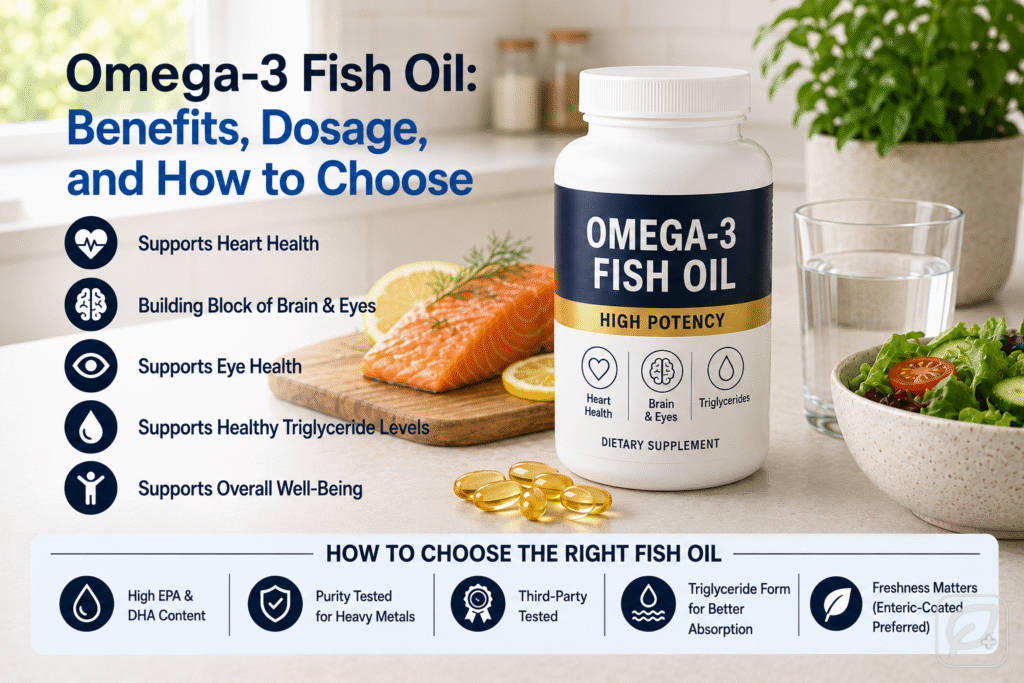
Fish oil quality varies more than most supplements because the oil can oxidize (go rancid). Look for: disclosed EPA/DHA amounts per serving, third-party testing (IFOS, NSF, or USP), and reasonable freshness practices — a strongly fishy or paint-like smell on biting a capsule is a bad sign. Algae-based omega-3 (algal oil) is the vegan route to DHA/EPA and follows the same rules. Our review methodology explains how we weigh certifications.
Quality matters for a safety reason too: because fish concentrate pollutants, fish oil can carry trace contaminants — mercury, PCBs, and dioxins — from the fish it’s pressed from. Better products are molecularly distilled to remove these and carry independent testing (look for USP or IFOS certification), which screens for contaminants and rancidity alike. The NIH Office of Dietary Supplements has more on omega-3 safety.
Bottom line
Eat fish twice a week if you can — that covers general needs. Supplement if you don’t eat fish, are targeting triglycerides with your doctor, or are advised to in pregnancy. Buy on EPA+DHA content and third-party testing, not bottle size.
This article is researched and fact-checked against peer-reviewed studies and government health databases (NIH Office of Dietary Supplements, FDA, PubMed). It is not written or reviewed by a licensed medical professional, and it is not a substitute for personalized medical advice — talk to your doctor before starting fish oil, especially if you take blood thinners or have a heart condition.
Sources: NIH ODS Omega-3 Fatty Acids Fact Sheet for Health Professionals, NCBI StatPearls: Omega-3 Fatty Acids, Keck Medicine of USC: High-dose DHA and Alzheimer’s-related decline (2026 trial)