Zinc is an essential mineral involved in immune function, wound healing, taste and smell, and hundreds of enzyme reactions. It’s also a supplement where the gap between the right dose and too much is unusually narrow — and where taking “extra for immunity” can quietly backfire.
How much zinc do you need?
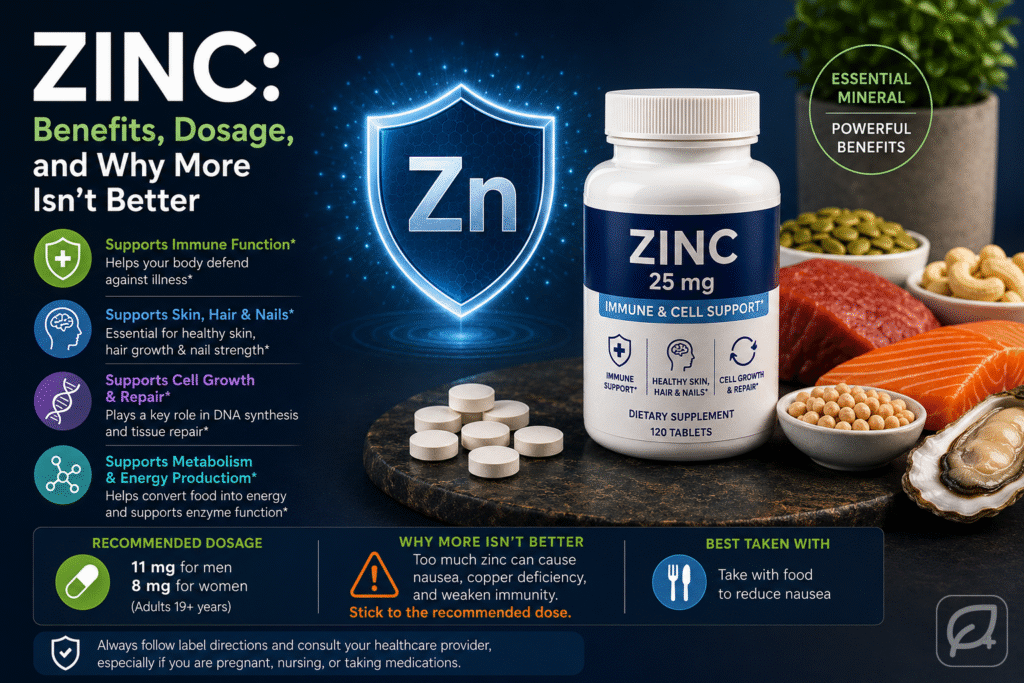
The Recommended Dietary Allowance for adults is modest: 11 mg/day for men, 8 mg/day for women (a bit more in pregnancy and lactation). Most people eating meat, shellfish, legumes, or fortified foods get enough. The Tolerable Upper Intake Level is 40 mg/day from all sources — and many popular zinc supplements contain 50 mg per capsule, which exceeds it out of the gate.
Zinc and colds: the honest read
The most popular reason people buy zinc is immune support. The evidence: zinc lozenges, started within about 24 hours of cold symptoms and dissolved slowly in the mouth, may shorten a cold’s duration modestly in some studies — results are mixed, and the effect is on duration, not prevention. Daily high-dose zinc as cold “prevention” in people who aren’t deficient isn’t well supported. One firm warning with regulatory history behind it: avoid zinc nasal sprays and gels — intranasal zinc has been linked to permanent loss of smell, and the FDA warned against those products years ago.
Here’s the actual evidence behind the lozenge advice. The strongest study to date — a 2017 individual-patient-data meta-analysis in Open Forum Infectious Diseases — found that zinc acetate lozenges providing more than about 75 mg of zinc a day, started within 24 hours of the first symptoms, shortened colds by roughly a third. It’s genuinely mixed, though: a 2020 randomized trial in BMJ Open found no benefit, likely because lozenge formulation matters — products with low zinc doses or added citric acid release too little free zinc to work. Two caveats worth remembering: the benefit is on how long a cold lasts, not how bad it feels (congestion, cough, and aches don’t improve), and those studies used high doses only for the few days of illness — not as a daily habit.
Zinc also got a pandemic-era test. In the 2021 “COVID A to Z” randomized trial in JAMA Network Open (214 outpatients), 50 mg of zinc gluconate a day did not shorten or ease COVID-19 symptoms compared with usual care.
The copper problem: why chronic high doses backfire
This is the most under-appreciated zinc fact. Zinc and copper compete for absorption, and regular high zinc intake induces a gut protein that preferentially binds copper and blocks it. Taken chronically above the upper limit, zinc can cause genuine copper deficiency — which shows up as anemia and, in serious cases, neurological problems. Published case reports describe zinc-induced copper deficiency mimicking serious blood disorders. If a clinician has you on higher-dose zinc long-term, they’ll typically monitor copper or pair the two.
Side effects and interactions
- Common at higher doses: nausea, stomach upset, metallic taste — taking zinc with food helps.
- Antibiotics: zinc reduces absorption of tetracyclines and fluoroquinolones (and vice versa) — separate doses by several hours, the same spacing rule as with magnesium.
- Penicillamine and some other drugs also interact — check with a pharmacist.
Zinc can also reduce the absorption of — and have its own absorption reduced by — certain antibiotics, including quinolones (such as ciprofloxacin) and tetracyclines, and it may interfere with some rheumatoid-arthritis drugs. If you take any of these, separate them from zinc by a couple of hours and check with your pharmacist.
Bottom line
Zinc genuinely matters — and deficiency is worth correcting (vegetarians, people with GI conditions, and older adults are at higher risk). But for supplements: stay at or under 40 mg/day total, treat 50 mg products as short-term tools rather than daily habits, skip nasal zinc entirely, and think “lozenges at first sniffle,” not “megadose all winter.”
This article is researched and fact-checked against peer-reviewed studies and government health databases (NIH Office of Dietary Supplements, PubMed). It is not written or reviewed by a licensed medical professional, and it is not a substitute for personalized medical advice — talk to your doctor before starting zinc, especially at doses above the RDA or alongside antibiotics. See how we review.
Sources: NIH ODS Zinc Fact Sheet for Health Professionals, NIH PMC: Zinc Toxicity — Understanding the Limits, Mayo Clinic: Zinc